
Journal
Caring for antique and precious linen: advice from a laundry house
27 June 2026
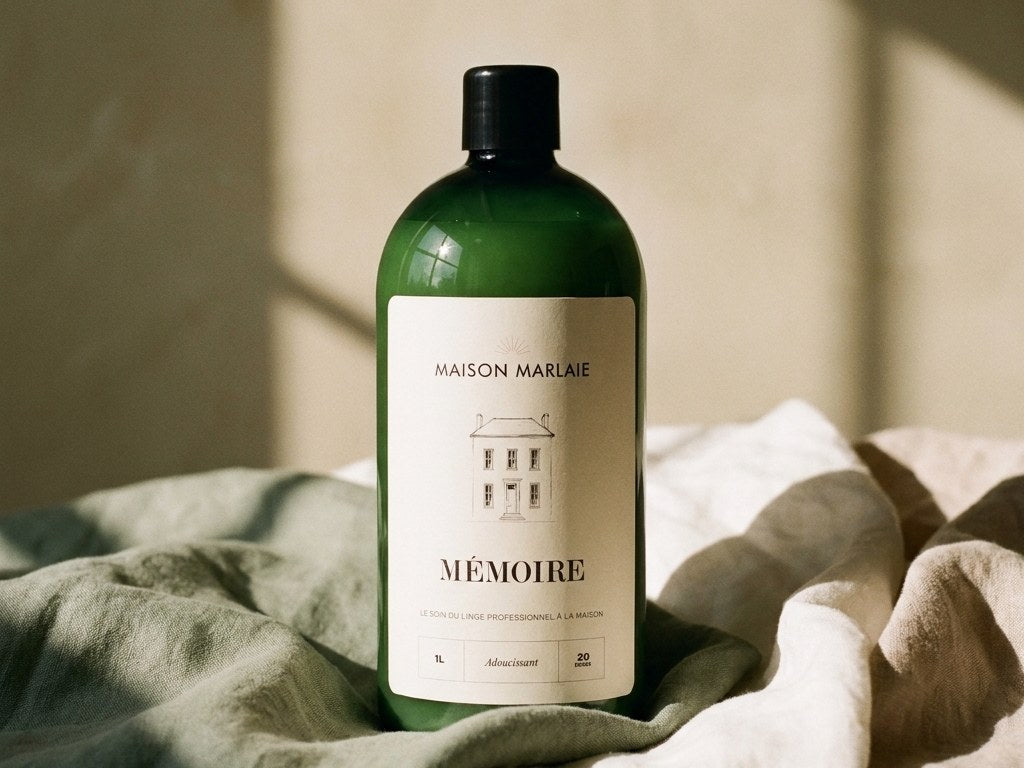
A sheet embroidered by a grandmother, a festive tablecloth that has passed through three generations, a pillowcase with Venetian drawn-thread work, a batiste nightgown: this linen is not treated like the rest. It has a history, fibres woven by hand or nearly so, motifs that cannot bear anything harsh.
Identifying what you have
Before any gesture, take the time to identify: the fibre (antique cotton, more fragile than modern cotton, linen, silk, batiste, cotton-linen blend), the fragile elements (hand embroidery, monograms, lace, drawn-thread work), the general condition.
First principle: the less you wash, the better
Antique linen should be washed as seldom as possible, never “preventively”. Each wash weakens the fibre.
Preparing the linen before washing
- Remove visible stains by targeted treatment.
- Gently brush the embroidered areas to remove dust.
- Protect fragile embroidery in a laundry net.
The possible washing techniques
Option 1, Hand washing (recommended)
- A bathtub or large clean basin.
- Lukewarm water (never hot, max 30 °C).
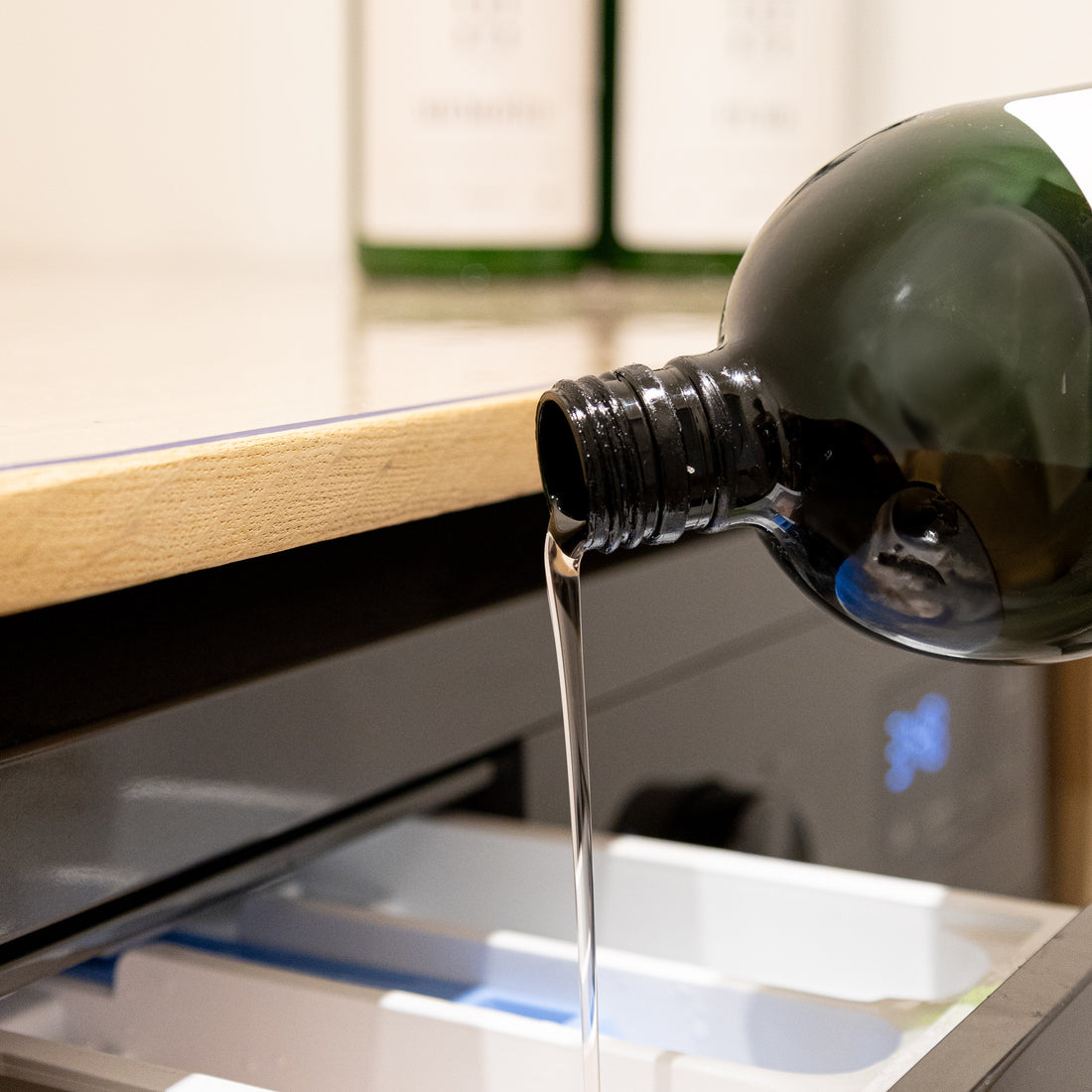
- 20 ml of gentle liquid detergent in 10 L of water.
- Soak 20 to 40 min, without rubbing or wringing.
- Rinse at length in clear water.
- Squeeze out gently by rolling in a dry sheet.
- Dry flat on a clean cloth, in the shade.
Option 2, Machine, delicate programme
- The piece in a laundry net.
- Delicate or wool programme, 30 °C.
- Minimum spin (400-600 rpm).
- Liquid detergent, 30 ml (a reduced dose).
- No softener for embroidered pieces.
Stain treatments
Never hot water, never bleach.
- Red wine: fine salt or talc immediately, brush, rinse cold. If it lingers: soak in cold water + percarbonate for 30 min.
- Tea, coffee: lukewarm water + diluted white vinegar.
- Old blood: cold water + natural Marseille soap.
- Candle/wax: scrape off cold, then absorbent paper + a warm iron.
- General yellowing: a long soak (4-12 h) in cold water + 3 tbsp of percarbonate + grated Marseille soap.
Drying and ironing
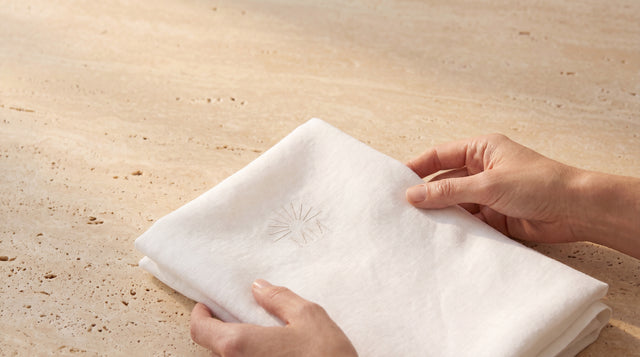
Dry flat, in the shade (never in full sun). Iron on still-damp linen, warm iron, on the reverse for embroidery.
Storage
Avoid plastic. Prefer acid-free tissue paper to wrap precious pieces (rolled rather than folded). Pale wood or cotton-lined drawers. Air out twice a year.
For exceptional pieces: a fine laundry service
Wedding tablecloths, antique gowns, rare lace: 15 to 40 € per piece. A reasonable investment to preserve a heritage.
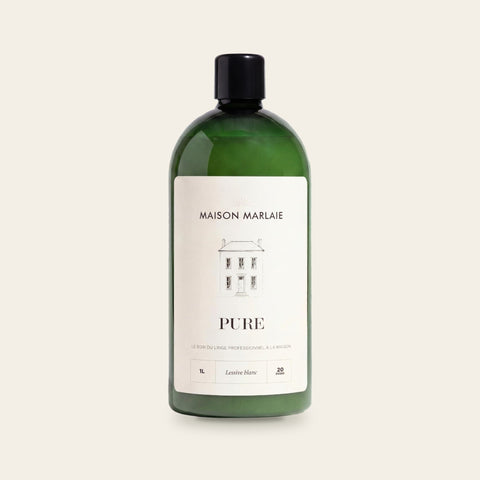
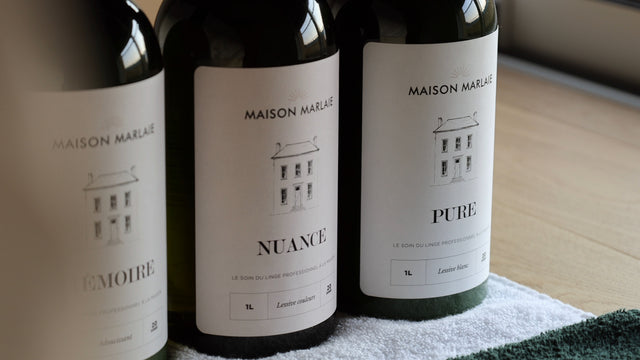
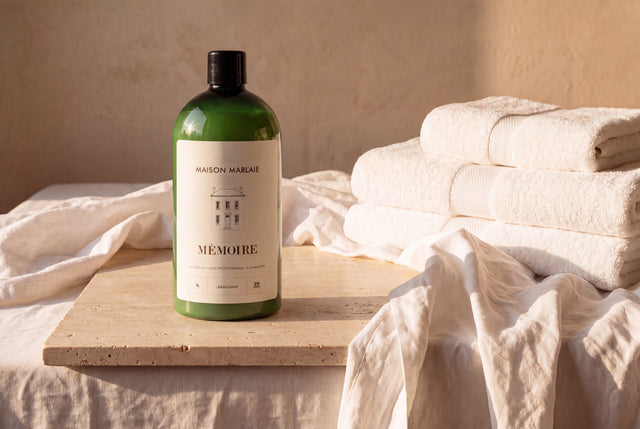
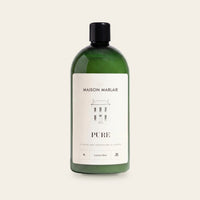
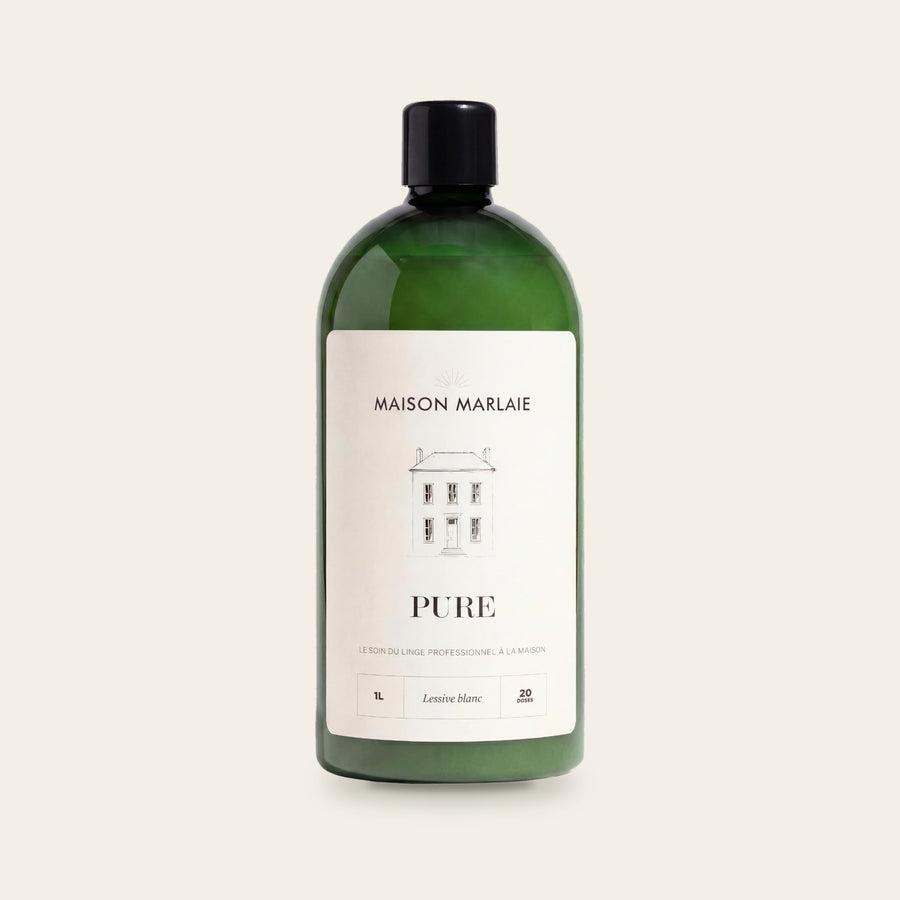
PURE, a gentle formula that respects the most delicate fibres.
In this article
PURE
The brilliance of white, preserved wash after wash.
€20/ 1 L
Shipped by the next day, delivered in 24 to 48 hours · Free returns within 30 days